



Benign tumours
The main treatments offered at IRCA focus on malignant and benign brain tumours, neurovascular diseases and functional disorders.
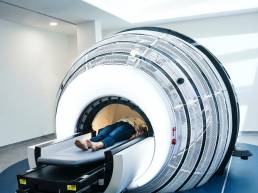
As previously mentioned, the ZAP-X is the most advanced stereotactic brain radiosurgery system in the sector, featuring cutting-edge technological innovation. And as we mentioned earlier, it is used to treat various conditions, providing highly relevant data to support clinical outcomes and efficiency.
Thanks to ZAP-X, IRCA is able to offer treatments that are specially tailored to each patient, taking into account not only their recovery but also their wellbeing throughout the entire process.
Treatments
Benign brain tumours
Among benign brain tumours, ZAP-X can treat acoustic neuroma/vestibular schwannoma, meningioma and pituitary adenoma. With well-defined, non-cancerous borders, these types of tumours are not usually deeply embedded in the brain tissue; they are therefore easier to treat and remove.
Schwannoma
This brain tumour develops from Schwann cells, which are linked to the nervous system, both outside the brain and in the spinal cord. This tumour, the vestibular schwannoma (also known as an acoustic neuroma), is made up of cells that act as ‘electrical insulation’ for nerve cells. It originates in the vestibulocochlear nerve (which runs from the inner ear to the brain), comprising the auditory nerve (hearing) and the vestibular nerve (balance).
The main symptoms are related to hearing loss and/or noises or ringing in the ear (tinnitus). If left untreated, it can lead to dizziness, loss of balance or headaches.
Pituitary adenomas
This slow-growing tumour develops from the pituitary gland; it is therefore also known as a pituitary adenoma. This gland, located at the base of the skull, produces many hormones responsible for controlling various bodily functions. Adenomas, the most common condition affecting the pituitary gland, are associated with this ‘master’ gland and account for 10–15 per cent of intracranial tumours.
The most common symptoms include tiredness, drowsiness, nausea and vomiting. But they can also include a runny nose with clear discharge, headaches or problems with the sense of smell.
Meningioma
This tumour arises from the layers of the meninges, which are the protective membranes surrounding the brain and spinal cord. Due to its location, it is not considered a tumour, but it is included in this category as it can compress the brain and/or nerves. It is the most common benign type, accounting for over 30% of cases, and is thought to be linked to genetic abnormalities. It is categorised into grades: (I) the tumour grows slowly; (II) it has an intermediate behaviour, meaning it may recur after removal; and (III) it is considered aggressive, with very rapid growth.
In this case, the symptoms affect various senses, not just hearing. Depending on where in the brain the tumour is located, symptoms can range from blurred vision to loss of smell; it is also possible to experience seizures, difficulty speaking or weakness in the limbs.